I'm sorry to have let this blog lapse -- bird guiding is requiring increasing time each year -- but I figure it's worth posting a few words about my new book, Birding Under the Influence: Cycling Across America in Search of Birds and Recovery. Primarily the story of my 18,000-mile, bird-motivated bicycle trip around the lower 48 states, the adventure narrative is also an honest look at the alcoholism and substance abuse which preceded my departure. Beyond the birds I seek, I write about the people I meet along the road, the incredible array of landscapes I experience, and the overdue introspection which thousands of solitary hours permitted. Rather than rehash the entire story, I'll point you here to read more about and buy the book.
You can also check out my new website, www.doriananderson.com
Monday, October 30, 2023
Post #217 - MY BOOK IS FINALLY FINISHED AND AVAILABLE!!!
Monday, June 20, 2022
Post # 216 - Warblers in the House!
The transcontinental crazyiness continues!!! I was in Asheville, North Carolina when I posted on May 4, and I've since visited Kentucky, Ohio, and Michigan while guiding for Tropical Birding and Tennessee, Indiana, and Illinois as part of my pet-sitting adventure. I've been fortunate to see a lot of migrating songbirds along my spring arc, and I'll use this post to share a bunch of recent warbler frames. Songbirds are the weakest part of my portfolio (shorebirds are the strongest), so it's great to grow my collection with new species!
First up is an obliging Protonotary Warbler which I found in Meeman-Shelby State Forest just outside of Memphis, Tennessee. A couple cycles of audio lured this curious individual into a fallen tree, and I was able to capture a couple frames as the bird bounced around the trunk and branches.
I'm even happier with this next frame because of the unique foliage/setting. Sandpipers, herons, and ducks are some of my favorite subjects, but their wide open and watery surrounds don't change much from place to place. In those instances, I really need the lighting to imbue the frame with color, mood, and character. However, that's not the case when shooting in forest as every perch and setting is unique. I mean, c'mon, how cool is this fallen log with the vines wrapped around it? I would have loved to have the green sprig in focus, but that wasn't gonna happen with so little light under the canopy (and the bird only posed for a second).
OK, let's move to Kentucky where I found this Swainson's Warbler at Red River Gorge outside Lexington. This species is very shy and shifty, so I'm stoked with these results! The shot with the dark background was dumb luck. The bird landed on a lit perch in front of a shaded hillside, and I darkening the shadows a bit in post in post to accentuate the spotlight effect.
Monday, May 30, 2022
Post #215 - A morning with Greater Prairie-Chickens in Colorado
Spring has been a whirlwind with Tropical Birding! I guided an 11-day Chasing Chickens loop through Colorado and Kansas April 6-16, flew directly to Texas where I lead a 5-day Upper Coast Migration trip from April 17-21, and finished the season with an 12-day haul through Kentucky, Ohio, and Michigan on our Warbler Tour from May 8-19. With five weeks of downtime before I head to Newfoundland and Nova Scotia June 28-July 9, I'm going to try crank out a few bog entries. Here we go...
I don't take many pictures on tour because I'm busy spotting and identifying birds for clients, but the stars aligned in Colorado, when we visited a Greater Prairie-Chicken lek outside Wray. My clients were content to sit the van on that frigid morning, so I exited the vehicle and slowly belly-crawled towards the birds. I reached a small rise 10 yards beyond the van, hunkered down, and waited. The males started displaying, and I had incredible views when the sun rose forty-five minutes later. I took ~1,200 photos across the next hour, and I'll use this post to present my favorites. After the lek slowed down and I crawled back to the van, the clients said they had as much fun watching me as they did the birds. They all thought I was crazy for lying on the frozen ground for nearly two hours, but that what it often takes!
This first frame was captured just as the sun cracked the eastern horizon behind me; that's why it has such a strong pink/orange hue. The window to preserve this beautiful cast on any given morning is really narrow, so I was stoked this displaying male wandered into photo range at the magic moment. Besides minimizing disturbance to the birds, getting into position in the dark guaranteed that I'd be able to utilize this amazing light.
This next frame shows the same bird, albeit a few minutes later, when he wandered closer to me to confront an approaching rival. I'm a huge fan of close-cropped portraits because they reveal feather detail so I couldn't have asked for more from this guy, the cluck at the other male rendering this frame full of personality.This fourth frame shows a different male. The sun is higher than in the first frame -- hence less orange/pink tones -- and I like this one as a color-neutral complement to it. I also like that both display tufts are visible in this shot. The pattern on the far/right one is really pretty. Notice how my shutter speed and ISO decreases as the sun rises (and thereby lends more light). In this instance I had sufficient light to stop down to f/7.1 (from f/5.6) to get more depth-of-field and critical detail across the bird's body.
As you can see, it was a memorable morning. There weren't many females/hens on the lek on this time around, so I'm hoping for photos of them next year. If you're thinking about joining us on next year's tour, have a look at this year's trip report for a detailed description of what we saw and did. My tour was birding-focused, but we offer a separate photo tour as well. That's it for now. Cheers!
Wednesday, May 4, 2022
Post #214 - My Extended Absence Explained

And that's why haven't written a thing since February. I am doing a lot of birding in the areas we're visiting, but the blog has really taken a backseat to logistics, pet-sitting, and pet-blogging (https://atailoftwositters.blogspot.com/). I've also done very little photography this year. It takes time to learn new areas, and we're moving around so fast that I don't learn anywhere well enough to shoot it efficiently; I'd rather just go birding since it's easier. I did take some really nice photos on my Colorado Grouse tour, so I'll try to get those up in the next few weeks.
So, that's what's happening with me at the moment. I hope to have more time to write later in the year, but please know that communication will continue to be sporadic for the next few months.
OK, planning and dogs call. Later!
Saturday, February 12, 2022
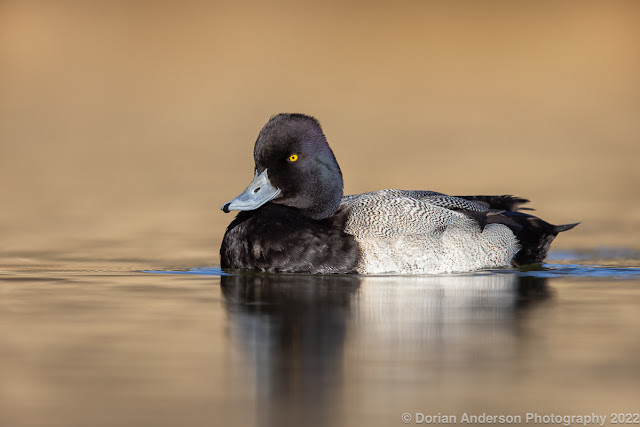
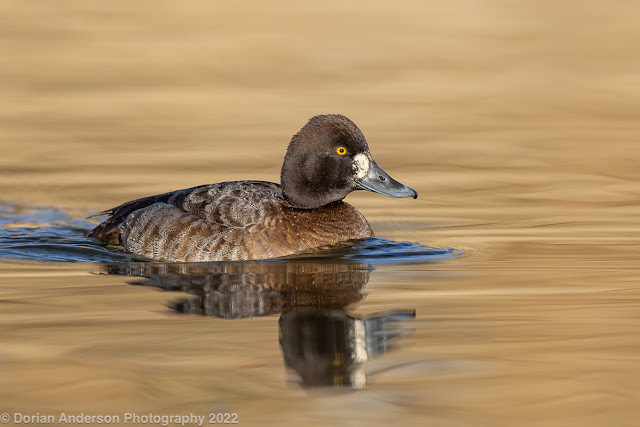
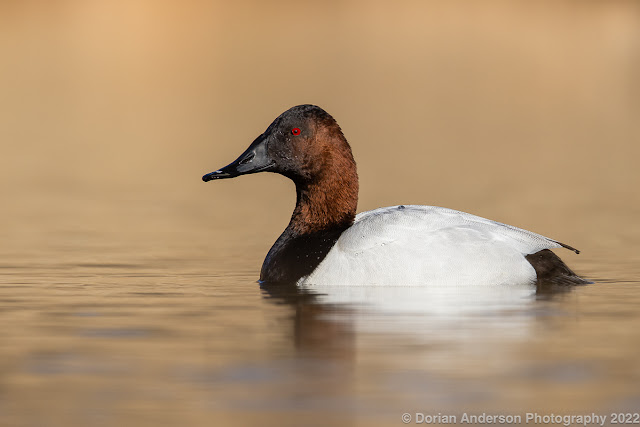
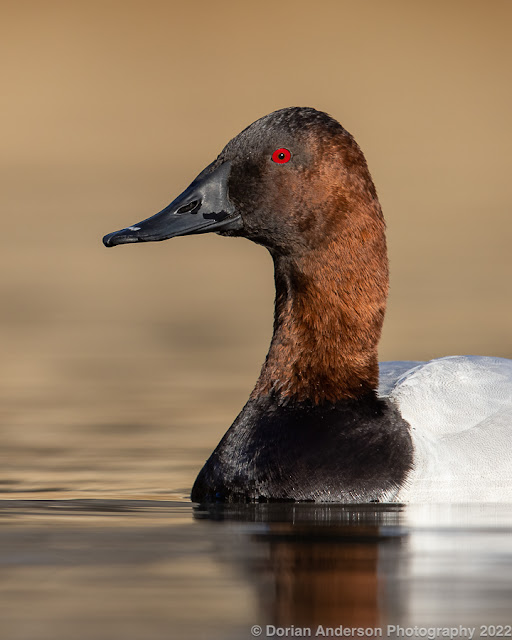
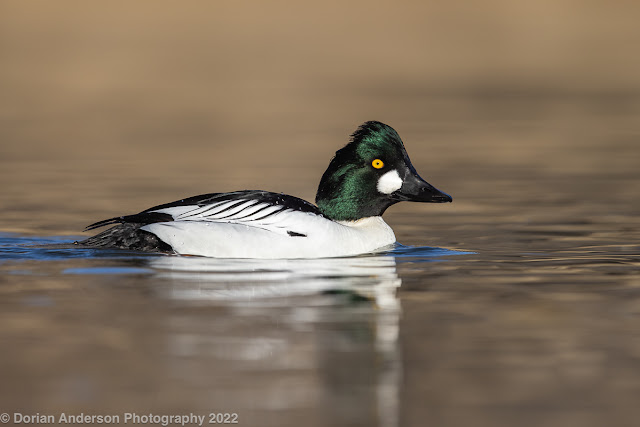
Post #213 - Waterfowl photos from Arizona
Since the female wasn't as contrasty as the male, I raised my lens a few inches so that I could capture a bit of texture on the water. I really like how the browns, tans, golds, and yellow blend together in this frame.
And lastly, I present this male Common Goldeneye. He wouldn't come as close as the others, so I had to slap the 1.4x teleconverter (TC) onto my lens. TCs can degrades the images when they're used on crappy lenses, but I don't have to worry about that with my 600 prime.
That's it for now. Later......
Monday, January 31, 2022
Post #212 - Biking for Birds in Nevada
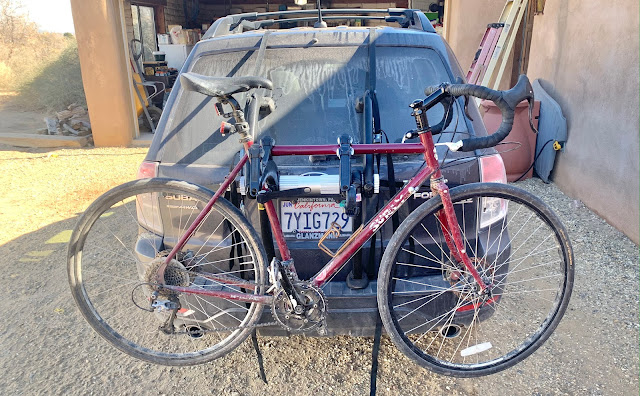
Regular readers know that Sonia and I are traveling the US for at least the first half of 2022, but I haven't revealed our exact motivation/purpose until now! Our plan to exchange pet-sitting for lodging while home/owners travel might sound insane, but www.trustedhousesitters.com allows people to do exactly that. I kept this news on the down-low until now because Sonia and I wanted to get a second blog, A Tail of Two Sitters, up and running before we let the cat/dog/whatever out of the bag. While we have a loose itinerary of places/states we'd like to visit in upcoming months, we're generally going to allow the pet-sitting winds take us where they will. And that's how we landed in Henderson, NV from January 13-16. I did a bit of birding while we were in the area, most of it by bike, and I'll use this post to highlight some of the places I visited. Here's how we're carting the bike around!
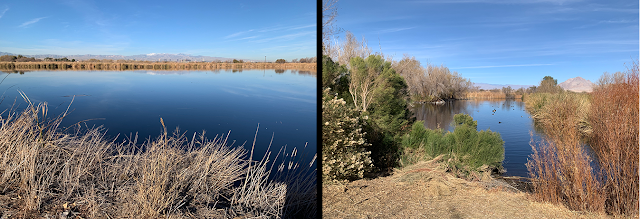
Among three Henderson sites which I visited on my bike, the Henderson Bird Preserve on the east side of town was the best. The impoundments hosted a great number and variety of waterfowl, and desert birds like Costa's Hummingbird, Crissal Thrasher, Vermillion Flycatcher, Black-tailed Gnatcatcher, and Abert's Towhee lurked in the surrounding bushes. Over 300-species have been recorded at the reserve, and I tallied 60 across two morning visits, a breeding plumage Hooded Warbler an unlikely highlight. Beware - the HBP has very strict hours. Please consult this webpage for info. If I had only one morning to bird in the Las Vegas area, the I'd use it at HBP. Images of reserve below.
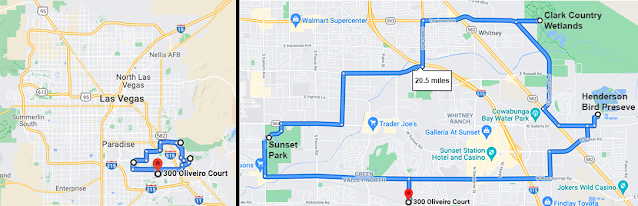
Neighboring Clark County Wetlands hosts similar species, but not in the same numbers as HBP. A series of trails winds through scrub and impoundments, and I think it's worth a quick pass even if it's a distant second to HBP. Same for Sunset Park. Though urban and heavily-visited, the park pond was loaded with waterfowl. The ducks are fed constantly, so super close views of Ring-necked Ducks, Canvasbacks, Redheads, Lesser Scaup, and American Wigeon were afforded. I hit the place on a cloudy afternoon, but it could be great for photography in the right conditions. Here is a map to show the relative locations of these HBP, CC Wetlands, and Sunset Park. It was easy to move between the three locations on the bike given our central location.
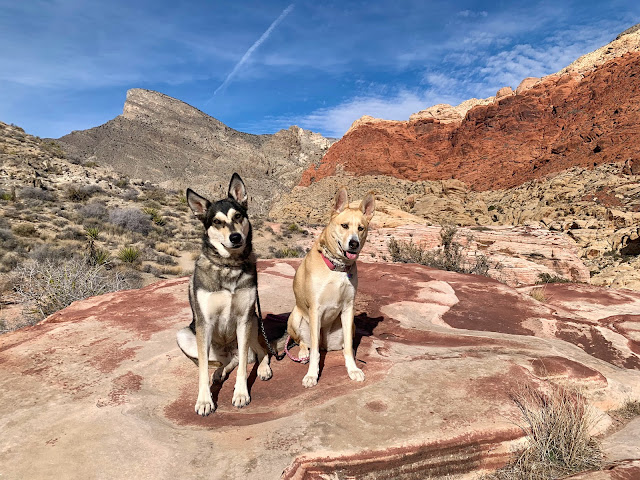
A bit farther afield, Red Rock Canyon on the west side of Las Vegas is totally worth a visit. It doesn't hold diversity or numbers of birds, but the landscape is amazing. There are loads of trails, and it would be easy to spend a full day exploring the area. The two dogs which we were watching loved scrambling over the stratified geology! Birds were few and far between, but I did find Rock Wren, Phainopepla, and Peregrine Falcon.
The bottom line is that there's an unexpected amount of birding and hiking to be done in the greater Las Vegas Area. While most who visit the city do so for other reasons, birders and outdoor enthusiasts will find plenty to occupy themselves over a three- or four-day stay.
Tuesday, January 11, 2022
Post #211 -- Some Southern California Photography
Sonia and I are back in the US! There was, however, some serious doubt as to our return from Chile; the Abbott Labs COVID AG-Card tests which we took with us kits were defective, so we had to cobble testing together the night before our flight from Santiago to Dallas (and onto Los Angeles). To compound the drama, Sky Airlines, a Chilean carrier, pushed our final domestic flight from Punta Arenas to Santiago back three hours, a circumstance which cut our connection time in Santiago from five hours to two. We landed in that capital, scampered off the plane, claimed our luggage, sprinted to the international terminal, checked into our American flight, and fought our way through immigration and security. By the time we hauled ass to the terminal's farthest gate, we had only ten minutes to spare. So yeah, getting back was a total circus!
I'll write more about Chile in future posts, but I'm gonna keep it simple this time around and post some photos I captured in Southern California just before we left. Recall that we've rented our San Mateo apartment and become digital/guiding nomads through September. Without a place of our own, we crashed with Sonia's dad in Riverside County for five days pre-Chile. There is some excellent photography to be had in that area, and I'll present a half-dozen shots that I captured across two sun-drenched mornings.
Those who read this blog regularly might recall a post from early-December where I described a choice run-in with Greater Yellowlegs, a common bird that managed to avoid my lens for the eight years since I departed Massachusetts. And wouldn't ya know it? A month after that entry, I had an even better crack at the species!
Sunday, December 26, 2021
Post #210 - An incredible encounter with Barred Owl
Greetings from the Southern Hemisphere! Sonia and I are eighteen days into our Chile vacation, and I’ll use our flight from Puerto Montt to Punta Arenas (Patagonia) as an opportunity to crank out a final blog entry for 2021. Though I’ll write about this trip when I’m back in the US, I’ll summon previous inspiration for this abbreviated installment.
I last saw my Philadelphia-based family in November of 2019, the pandemic and other commitments denying me contact for nearly two years, so Sonia and I headed east for two weeks at the end of October. We spent five days at my parents’ house and used another nine to road trip through New York, Connecticut, and Massachusetts. While Sonia reunited with a long-time friend in Boston, I headed north for a day of birding on the New Hampshire Coast, an area I hadn’t visited since January 1, 2014 (the first day of my bicycle Big Year). Here’s my ‘Biking for Birds’ blog entry from that kick-off. Damn it was cold!
Besides nostalgia, my recent New Hampshire brush gave me an wonderful window to Barred Owl, a species I hadn’t seen since Sonia and I moved to California in 2015. My bladder pushed to its limit while I was birding in Rockingham County, I ducked into wooded patch to relieve myself. I'd barely entered the trees when a large bird took unexpected flight from ten feet above my head. The commotion scared the hell out of me, but I fought-off premature evacuation as the startled owl fled. I took care of bathroom business, walked deeper into the woods, found the owl perched on an exposed branch, and raced back to the car to grab my camera.
The bird was incredibly trusting as I crept closer, and I was able to capture a bunch of frames as the arboreal noble watched curiously. The blur at the top and bottom of the frame in the first shot is deliberate; it was created by shooting through a thin veil of leaves which separated me from the subject. I think it lends a sense of secrecy, like I’m spying on the bird in its forested surrounds.
Barred Owl - Strix varia
Canon 400mm f/4 IS DO II on EOS R5
1/200 at f/4, ISO 3200
I don’t think I’m a particularly creative bird photographer, my work being mostly technical/editorial, so it was fun to try something different with this cooperative subject. How cooperative? Just check out this second shot. While Image Stabilization reduced motion blur, I also braced myself against a tree to further ensure a sharp result with the slow shutter.
Barred Owl - Strix varia
Interestingly, the New England leaves changed color very late this year; some to whom I spoke suggested that the delay was caused heavy summer rains. Regardless, you can see this patch of New Hampshire woods was still completely — and unusually — green at this late-October juncture.
Cheers for now!
Sunday, December 5, 2021
Post #209 - A few photos from Coastal Texas
A few weeks ago, in early-November, I served as a guide at the Rio Grande Birding Festival in Harlingen, Texas for the sixth time in seven years, the 2020 installment cancelled because of the pandemic. I'm responsible for leading morning field trips on each of the five festival days, but I have the afternoons to explore the vendor fair, go birding with other guides, or sneak off for photography. I had some great luck with the camera on South Padre Island, and I'll use this post to share those results with you.
1/6400 at f/5.6, ISO 800
1/4000 at f/5.6, ISO 800
Canon 600mm f/4 IS II + 1.4x III on EOS R5
1/3200 at f/5.6, ISO 640
1/4000 at f/5.6, ISO 800
As much as I love shooting shorebirds, this White Ibis stole the show because I'd never had a decent photographic crack at the species. This example favored water that was 6 to 8 inches deep, so I had to be very careful to keep my lens dry as I crawled/floated/maneuvered into shooting position between the bird and the setting sun. The ruffled feathers in the first shot result from breeze blowing across the bird's left side. I don't know the identity of the prey in the second shot, but it was thrashing around like a worm or small eel.
Canon 600mm f/4 IS II + 1.4x III on EOS R5
1/4000 at f/7.1, ISO 640
White Ibis - Eudocimus albus
1/4000 at f/5.6, ISO 800
And lastly, we have this Piping Plover. I don't waste time taking pictures which include man-made stuff -- feeders, metal perches, roads, etc -- because it's lazy photography, but I make exceptions for banded birds because 1) reporting the band to this website helps researchers and 2) it's fun to learn the bird's story. The leg tag might be difficult to read in this wide composition (chosen for dramatic/creative effect), but it's sufficient to identify the bird as 48F. The banding folks sent me a certificate of appreciation for my submission, and I've added it to my running collection as displayed on my photo website. Hopefully, I'll find and photograph more banded birds in the future!
Canon 600mm f/4 IS II + 1.4x III on EOS R5
1/4000 at f/5.6, ISO 1000
Saturday, November 20, 2021
Post #208 - My final Bay Area bike chase and big plans for the future.......
No, I'm not retiring from the glory-sport that is bike-birding, but I will be vacating the Bay Area for the next 10 months. Airbnb is permitting Sonia to work remotely through next September, and Tropical Birding will fly me from wherever I am to wherever my tours run. So, with that flexibility, we've decided to rent our apartment and hit the road! We're going to Chile for all of December, and we're planning to spend the remaining winter in CA, NV, AZ, and NM once we've returned. We've not visited OK or AR, so we'll hit those states en route towards LA, hopefully in early-April. From the bayou, we'll follow the Mississippi River north through May. We'll explore Ontario and Quebec in June and July, and we're planning on camping in Norway, Finland, and Sweden in August before returning to the US, picking-up the car in Philly, and recrossing the country in September. Throw my tour schedule (TX, FL, NC, MA, WY, Newfoundland) on top of that plan, and it's going to be a very hectic year. I'm optimistic we'll have room for my bicycle on the US and Canadian legs, but there should be plenty of blog material regardless!
Given the necessary preparations ahead of our departure, bike-birding has recently been curtailed. I did, however, put a pause on planning to pursue a Gray Catbird (GRCA) which was found in the San Francisco Botanical Garden on November 1st. I'd missed the mostly-Eastern species (range map below) on two different occasions -- once in San Francisco's Presidio in September of 2018 and again Half Moon Bay in August of 2019 -- so I was keen to avoid a third strike when I mounted up on the morning of November 4th.
The 19.5-mile ride to the Golden Gate Park was painless (~85 mins). Half-a-dozen birders hadn't observed the bird by my arrival, so I settled into the search for the next hour. And then another. And then another. Nancy Palmer caught a glimpse of something promising as the fourth hour arrived, but it took another 30 minutes before a clearer view confirmed her initial suspicion, the bird finally perching in the open for all to see. It was a great 'get' given that I was ready to fold the search five minutes earlier!
The ride avenged my previous misses on this species and wrapped-up my Bay Area biking with a savory victory. I'll miss my adopted home these next ten months, but I know there will be plenty of biking and birding when we return next fall.
Here are some numbers since we moved to San Mateo in May of 2017.
2019: 2,086 miles
2021: 2,080 miles
Alameda 194 (29 checklists)
Particularly notable birds:
Tufted Duck (SM)
Black Rail (heard-only in SC)
Bar-tailed Godwit (SM, Ala)
Ruff (SM, SC)
Rock Sandpiper (SF)
Parakeet Auklet (SF)
Slaty-backed Gull (SM)
Red-footed Booby (SM, SF)
Northern Gannet (SM)
Dusky Warbler (SM)
OK, enough. More from the road in the near future. Cheers!