Wednesday, July 31, 2019

Post #163 - Bay Area Bar-tailed Godwit - by bike!

Opened in 1967, the San Mateo Bridge stretches 7 miles across the middle of the San Francisco Bay. It is the longest bridge in California and allows nearly 100,000 vehicles to commute between San Mateo and Hayward each day. It does not, however, feature a footpath or bicycle lane, a complication making a mid-bay crossing impossible for pedestrians and cyclists. Those can use the Dumbarton Bridge ~12 miles to the south, but detouring to that span is an impossibility for walkers and a big inconvenience for riders.


Ariel view of San Mateo Bridge 

Enter Bar-tailed Godwit, an Old World species which also breeds in Western Alaska. The bird is a rare but regular vagrant on the Pacific Coast, and I figured one would eventually appear in my Bay Area surrounds, a suspicion confirmed when an individual was recently discovered at Ora Loma Marsh in Alameda County.


Breeding plumage Bar-tailed Godwit from Adak, AK
Photo from Laura Keene (check out her flickr account)


Bar-tailed Godwit records from eBird

Though Ora Loma March is 10 straight-line miles from my apartment, the bike ban on the San Mateo Bridge would force me south to the Dumbarton, a circumstance rendering the vagrant godwit 34 riding-miles from my home. At 68 miles round-trip, my pursuit would need be calculated and organized to maximize the prospect of success.


My godwit pursuit

The initial godwit report - not posted until 10pm Sunday, July 21st - noted the bird was observed on the late-afternoon high tide that day. The reflexive approach would have been to aim for the same tide on Monday, but I wanted to know the bird had established a minimal pattern before investing 68 riding miles into it. A 5- to 6-hour bike chase can wipe me out through the following day as well, so I need to be selective in which birds I chase. I'm generally willing to concede short-staying vagrants (i.e. one day wonders) to ensure a higher overall success rate on chasing birds which remain in their discovery areas. I can chase a rarity that is 15 miles away (~1 hour) without thought, but the calculation steepens as the intervening distance grows. It's a similar calculation in the car, albeit with infinitely fewer variables in the equation.


Panorama of Ora Loma March

When the godwit was reported on the same late-afternoon high tide on Monday, I knew Tuesday was my day. I powered south out of San Mateo at 2pm, crossed the Dumbarton, and continued north along the eastern bayshore to arrive at Ora Loma at 4:20pm. The rising water had already concentrated hundreds of shorebirds in the marsh, and another birder (James Watts) and I split the task of scanning the roosting throngs, him from one end of the assembly and me from the other. James spotted the bird within a few minutes, and I bounded the 100 yards to his scope for a killer view of the sought rarity. The bird spent the next hour resting and preening before being flushed by a low-flying Turkey Vulture at 5:30pm. Half a dozen others arrived in that interval, and all enjoyed point-blank views of the rare shorebird.


Phonescoped winter plumage Bar-tailed Godwit
Bay Area bike bird #288
Traditional ABA bird #733 (#731 Lower 48)

The WNW headwind riding back across the Dumbarton and along the western bayshore was heavily impeding, but I fought through it and returned home at 8:20pm. Bike-birding celebrations are always broken into two parts, the first half in the field when the bird is observed and the second half when I return home safely. The godwit was my longest single-day chase since moving to the Bay Area, so my sofa felt great when I finally collapsed onto it to watch Deadliest Catch at 9pm!

It's worth mentioning the godwit was seen again at 7pm on Tuesday evening (after I'd departed) but not on subsequent days. In this instance, delaying for a day was the perfect move, but I'm sure I'll get burned at some point. It's inevitable in this game......

Friday, July 26, 2019

Post #162 - Epic bike-birding battle with Parakeet Auklet

There have been some epic rivalries in my lifetime: Red Sox versus Yankees, PC versus Mac, the Empire versus the Rebel Alliance. None, however, can hold a candle to Dorian versus Parakeet Auklet, an unrelenting 3-year battle that finally resolved this past week. To fully understand the struggle, I offer the following background and history.

Parakeet Auklets in Alaska. I haven't birded AK, so
Marc Kramer (birdingbybus) hooked me up with this shot.

Parakeet Auklet is a small member of Alcidae, a Northern Hemisphere bird family including murres, guillemots, auklets, murrelets, and puffins. Collectively and commonly referred to as Alcids, they share a general black-and-white color scheme, strong underwater swimming abilities, and an endearing terrestrial clumsiness. If you don't think Parakeets Auklets are super cute, then you have no soul.

This one from Tom Ford-Hutchinson, also from Alaska

Parakeet Auklets breed colonially on cliffs around the Bering Sea and adjacent bodies but disperse to sea during the non-breeding season. We don't know much about their pelagic wintering grounds, but at least a few reach waters off Washington, Oregon, and California each year. Though there are a few coastal records, but pelagic trips from Westport, Washington offer the best chances of observing this species in the lower 48 states. 

Parakeet Auklet eBird records for summer (L) and winter (R)

Given that background, it was hella unexpected when a representative appeared at Land's End in San Francisco on July 13th, 2016. There is only one eBird record for that bird - likely because it vanished before others could pursue/relocate it - but the unlikely story renews when the presumed same bird reappeared at Land's End a year later, on July 16th, 2017. I'd moved to San Mateo in May, so I jumped into the car and sped to San Francisco with hopes of adding the unlikely auklet to my ABA list. My Bay Area Bike List hadn't become the obsession it is now, and I didn't want to risk the bird disappearing given its brief stay the previous year. I missed the bird on that first try, July 16th, but secured it on my second two days later. Yay.

The area the auklet had favored each July

It was really sweet to see such a cool bird outside its usual range, but the euphoria waned in subsequent days, mostly because I knew I could have biked the 46 round-trip miles instead of driving them. Regret eventually overcame me, and I biked back to Land's End to redeem the auklet on July 21st. I was unsuccessful on that day, and I missed a second time on July 23rd before leaving for Philadelphia a few days later. By the time I returned from the East Coast, the auklet had departed. Boo.

I thought 2017 was the end of the story, but the bird reappeared for a third July in 2018. It stayed for the better part of a month, but I was in Colombia during his entire visit. We couldn't properly renew our rivalry with me away, but I could almost hear the bird mocking me from a distance. Ugh.

Fast forward to 2019. The damn thing comes back for a fourth consecutive July, but I'm in Colombia again. (And yeah, I know it's totally neurotic to monitor the CA list while traveling.) Fortunately, the bird stuck around, and I returned to the Bay Area to make another self-powered attempt on the 12th. Result? Miss. Undeterred, I made an additional attempt on the 16th. Result? Another dip. My addictive personality in full effect, I made yet another attempt on the 20th. Result? Booyah!


Phonescoped record shot of SF Parakeet Auklet

A group of ten of us had nice views of the bird as it fed and preened in the surf below its favored Hermit Rock. It was really great to share the bird with others, most of whom had missed it previously. The auklet was a tremendous bike-birding triumph, one requiring 5 trips and 230 miles of cumulative riding (46 miles per attempt). I'm sure there will be more chases - bike and car - in my future, but I doubt I'll ever chase another individual rarity 7 times (twice by car in 2017, twice by bike in 2017, and thrice by bike in 2019)!

More adventure coming, so please stay tuned. Also, here's a recap of my recent Colombia Photobirding trip for Alvaro's Adventures. It was really sweet!

Wednesday, July 17, 2019

Post #161 - Recap of my Colombia Photobirding tour for Alvaro's Adventures

My inaugural Colombian Photobirding Adventure for Alvaro's Adventures was an unbelievable success! We found 376 species in 11 days and experienced no logistical snafus save for a local protest blocking one of the main inter-Andean arteries. That impromptu rock-and-log blockade forced an hour detour, but understanding participants absorbed the delay without grumbling. Driving in Colombia - as in much of Latin America - is notoriously inefficient, and roadside drama is par for the course. Whether it's cows crossing the road, an overturned sugarcane truck, or a dancing mob of soccer fans, Colombian travel is always an adventure!


The intrepid octet with Howler Monkey accompaniment at 
Otún Quimbaya (Colombian co-leader Andrea Beltrán at far right)

As for birds, our incredible total featured 46 species of hummingbirds, 9 species of parrots/parakeets, 11 species of antpitta (9 seen), 8 species of tapaculos, 24 species of furnarids, 44 species of flycatchers, 7 species of cotingas, and too many colorful tanagers to count. Notably, we tallied 18 Colombian endemics, 15 seen and 3 heard-only.

***all photos taken at sites visited during the tour***

Sword-billed Hummingbird (Ensifera ensifera) against cloud
Canon 600mm f/4 IS II + 1.4x III on EOS 1DX2
1/250 at f/7.1, ISO 500, fill flash at 1/16

Green-and-black Fruiteater - Pipreola riefferii
Canon 100-400mm f/4.5-5.6 IS II on EOS 1DX2
1/100 at f/7.1, ISO 2000

Our tour started in Cali and visited a wide array of elevational habitats between 3,000 and 13,655 feet in the Western and Central (930 to 4,138 meters) before terminating around Manizales and Pereira. For those unfamiliar with South American topography, it is vital to understand that the Andes trifurcate into three discrete ranges in Colombia. Species have evolved independently in each branch, and most of Colombia's endemics are found in and between the three ranges (all but one of the rest - Chiribiquet Emerald - evolved in the isolated Santa Marta Mountains on the Caribbean Coast). With time in both the Western and Central Andes, we were afforded a very wide sample of Colombia's diverse and highly-specialized avifauna.


Chestnut-bellied Flowerpiercer - Diglossa gloriosissima
Colombian endemic found only in the Western Andes
Canon 100-400mm f/4.5-5.6 IS II on EOS 5D4
1/320 at f/5.6, ISO 1600

Video at Tatamá National Park where we saw Chestnut-bellied
Flowerpiercer, Munchique Wood-Wren, and Gold-ringed Tanager

We designed this tour with photographers in mind, and clients had fabulous photo opportunities at many of the sites we visited. All participants birded together in the mornings, and the two die-hard photographers usually split off to do their thing at lodge feeders in the afternoon. The balance worked really well, and even self-described 'hardcore' birders had their cameras glued to their faces for much of the trip. With point-black views of so many incredible birds, everyone went home happy!


Crescent-faced Antpitta - Grallaricula lineifrons
Canon 600mm f/4 IS II on EOS 1DX2
1/80 at f/5.6, ISO 2000

Thick-billed Euphonia - Euphonia laniirostris
Canon 600mm f/4 IS II +1.4x II on EOS 1DX2
1/200 at f/8, ISO 1600

So, that's a very cursory overview of what transpired on our tour, none of which would have been possible without our wonderful ground operator Andre Beltrán of Birding and Herping. She was brilliant with the birds and a master of logistics, and I cannot praise her personality and professionalism enough. Andrea, Alvaro, and I are already planning next year's iteration; it will run late-June into early-July and probably be a day longer than this first run. Please contact me if you are interested in securing a spot. We only took 8 clients this year, so book early to make sure you aren't left behind!


It doesn't get any better than Termales del Ruiz!

Birders enjoying dinner at Tinamu Lodge.
Spectacled Owl flew in while we were eating!

You get the idea. Colombia is awesome. Come with us next year. And in case you're still waffling, here are a few more shots to convince you!


Rufous Antpitta - Grallaria rufula
Canon 600mm f/4 IS II on EOS 1DX2
1/80 at f/5.6, ISO 2000

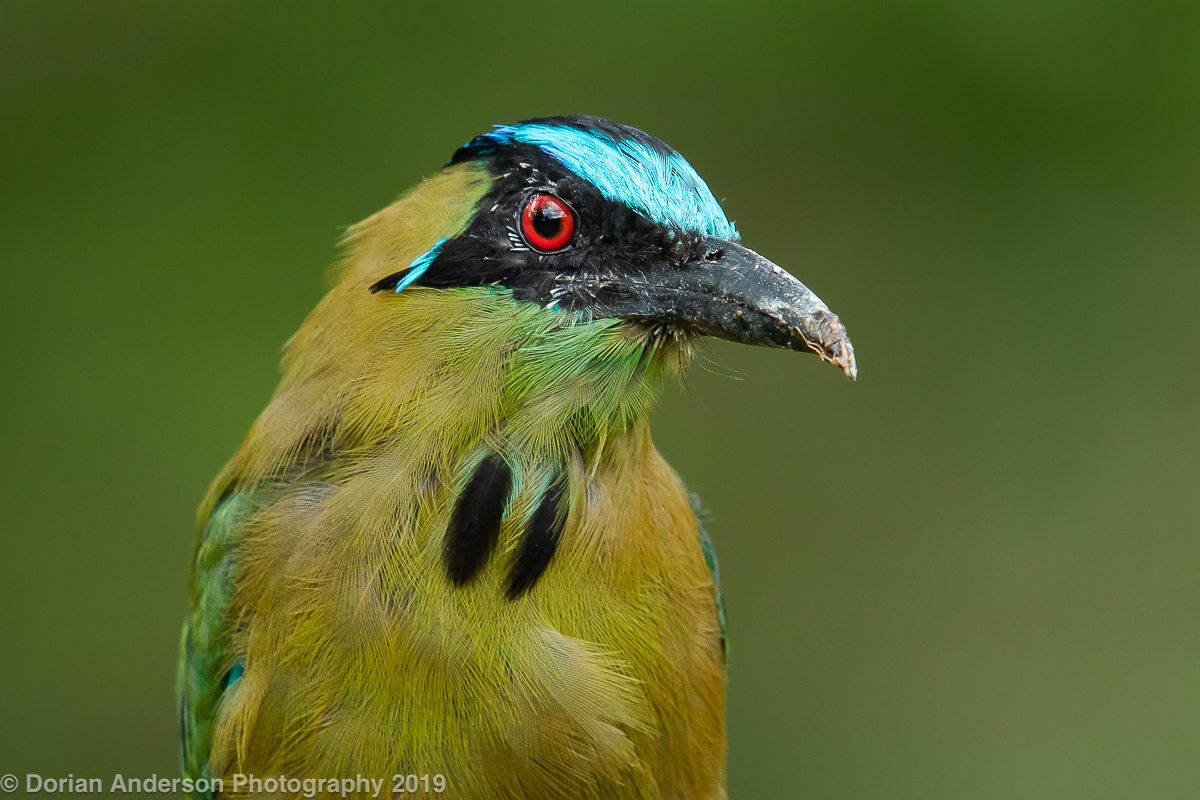
Andean Motmot - Motmot aequatorialis
Canon 600mm f/4 IS II + 1.4x III on EOS 1DX2
1/200 at f/7.1, ISO 1600

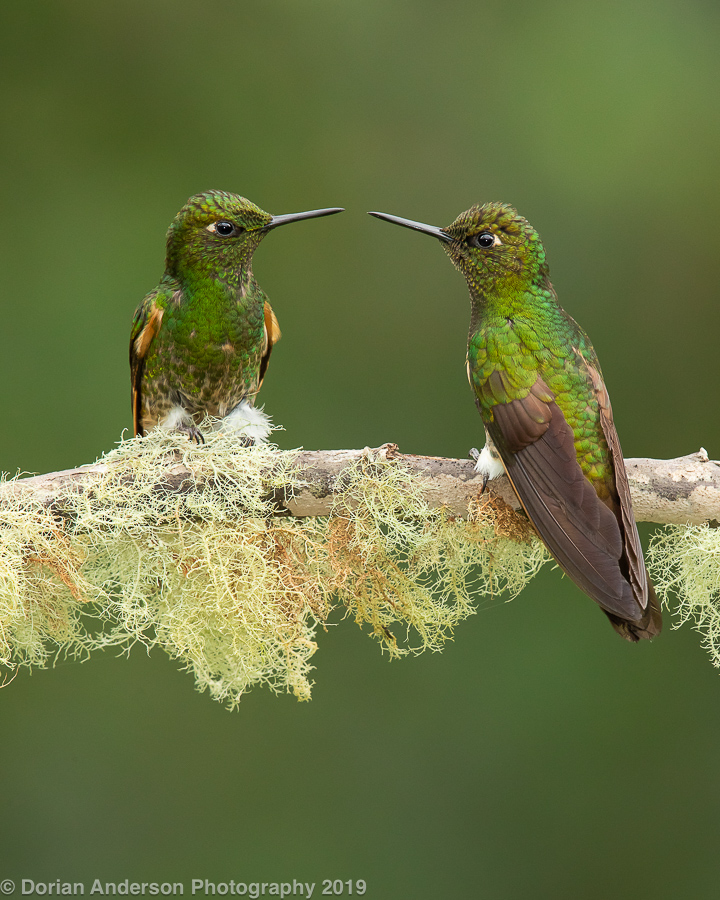
Buff-tailed Coronets - Boissonneaua flavescens
Canon 600mm f/4 IS II on EOS 1DX2
1/100 at f/9, ISO 1600, fill flash

Sunday, June 16, 2019

Post #160 - Eastern strays everywhere!

The following is quick recount of some of my recent adventures in bike-birding. I've been a bit of a message board vulture lately, so I need to find some good birds to redeem all the stuff I've been poaching! Anyway, on with the show.....

On June 6, there were two would-be new birds for my Bay Area bike list in the South Bay, a five-day-staying Indigo Bunting at the Stanford Dish and a day-before-discovered Eastern Bell's Vireo at Don Edwards in Alviso. My plan was ride south to Stanford, look for the bunting, and monitor the list-server to see if the vireo had overnighted. If it had - and I'd managed to find the bunting - I'd continue south to Alviso to look for it. That trajectory (map) was 64 miles and would require about 4.5 hours of riding. However, northwestern gales would build through the morning, so the longer it took me to find the bunting, the harder the return leg from Alviso would become.

The most direct path to the bunting and the vireo - 64 miles.

I left San Mateo at 6:30am, arrived at Stanford at 7:30, and found the bunting 8:30. With no reports of the vireo, I birded the dish to kill time and wait for news. Receiving none by 9:30, I rolled over to Shoreline and slowly birded my way north along the under the assumption the vireo was gone. Just before rejoined streets in East Palo Alto at 11:30, I checked the message board one last time. Wouldn't ya know? The vireo had just been reported! Worse, it had been present all morning! Had I immediately departed Stanford for Alviso I could have collected the bird and been nearly home by the time I received word of it. The problem is that it's really difficult for me to commit to a chase without knowledge - or at least suggestion - the sought bird is present because riding is so demanding and time consuming. I can't casually investigate as can folks in cars because getting anywhere is such a big production.

Indigo Bunting - Bay Area bike bird #284


Given the new information, I faced a difficult decision: return home without the vireo (mentally painfully) or turn around, retrace my tracks to Shoreline, continue to Alviso, tick the vireo, and then battle vicious headwinds all the way home (physically painful). I knew folding such a great Bay Area bird would bother me forever, so I activated Beast Mode and headed south.

Bell's Vireo sightings in the Bay Area and beyond - 
there aren't many, at least in eBird.

"I'm just chasing the vireo so I don't get fined"

With a decent WNW breeze behind me, into only took me an hour to reach Alviso from my East Palo Alto turn-around point. I heard the vireo calling as soon as I arrived, and I had eyes on it within 5 minutes. In traditional Bell's fashion, it preferred tangled foliage, so it took another 20 minutes to obtain an identifiable photo. As soon as I did, I remounted and began the long ride home.

(Eastern) Bell's Vireo - Bay Area bike bird #286

The slog was as rough as I imagined, particularly the southern/eastern half on the bayshore where I was exposed to the full force of the wind. I ducked into the neighborhoods at Shoreline, a strategy partially mitigating the breeze but subjecting me to traffic and lights in exchange. My return ultimately required 3 hours of riding, 50% longer than usual. I managed but was mostly incapacitated the following day. It was totally worth it for such a good Bay Area bird!

The path that actually transpired. The wind was 
blowing at a steady 15 MPH the whole return - ouch.

And since I've been presenting birds in groups of three for my last few posts, I'll throw in this American Redstart I poached in McLaren Park. Reported mid-morning on June 11th and just over an ride hour from my house, this bird was a no-brainer, even in the sweltering temperatures! 75 mins out, 45 mins to find the bird, and 60 mins home - easy!

American Redstart pursuit

American Redstart - Bay Area bike bird #286

OK, that's it. I'm off to Colombia for 3 weeks on Friday, so this will be the last post for a while. Cheers!

Thursday, June 6, 2019

Post #159 - More spring bike birding - the hits keep coming!

Two quick notes before I get into things:

1) My 2019 Colombia installment for Alvaro's Adventure's is sold out, but we've already slated our 2020 iteration for June 20 - 30. It will operate like a traditional birding tour and offer some really sweet photo ops for those that want to take advantage of them. You can do damage with a 100-400mm lens in the tropics (see below), so mark your calendars now!


2) I am leading a Cuba trip for Alvaro's Adventures in December. Access to this incredible birding destination is in constant limbo - as evidenced by new restrictions implemented by the Trump administration - so seize the opportunity and join us this winter!

OK, back to the bike!

The weather has continued to improve since my last bike-birding update two weeks ago, so I've undertaken a few longer rides to offset my newly-developed donut addiction. The first took me to areas south of San Jose to look for American Dipper and Black-chinned Hummingbird, two species I haven't seen in the Bay Area. Prior to this excursion, I'd only bike-birded the foothills as far south as Stanford, so everything beyond my alma mater was novel cycling. Foothill Expressway offered nice riding, and the residential streets of Cupertino and Saratoga were easy to navigate. The 35-mile outbound ride netted me 370 feet of vertical gain from 860 feet of climbing, but the hills were rolling and presented no significant impediment.


I arrived in Los Gatos roughly two hours after departing San Mateo and commenced my dipper search in the concrete flume south of town, an area recent eBird reports indicated the birds frequented. Those reports were spot on, and I found an adult feeding a fledgeling after just 20 minutes. I would have loved to see and photograph them in a more natural setting, but it was still really cool to watch the adult make repeated foraging dives into the brisk current.

American Dippers - adult (L) and iuvenile (R)
Bay Area bike bird #281

The dipper ticked, I jumped back on my bike and followed the very nice Los Gatos Creek Trail north into the San Jose sprawl. eBird showed scattered Black-chinned Hummingbird sightings from the Willow Glen area, so I kept on the pedals towards that vicinity. South of Campbell Park, I spotted a hummer with a very white breast and slightly curved bill collecting spider webs from a stone wall. It disappeared into some adjacent foliage before I could unequivocally label it a female Black-chinned, but I walked around the corner and found her building a nest right next to the bike path. Additional looks confirmed my identification, and I captured some record shots as she came and went from her nest over the next 20 minutes. The male was sticking to the tops of some nearby tall trees and didn't offer much in the way of looks or photos (all backlit). 

Female Black-chinned Hummingbird on nest
Bay Area bike bird #282

My second long ride targeted the Black-tailed Gull Chris Hayward and Malia Defelice found at Gazos Creek on Thursday, May 30. This bird presented three specific challenges. First, I received word of the bird to late to chase it on the day of its discovery. Second, it flew off soon after its discovery, so there was a good chance I'd be chasing a ghost whenever I tried for it. Third, the round-trip ride to Gazos is best split into two days because of the > 4000 feet of climbing its 80-mile length requires. It can be done in a day, but it's a lot of riding and doesn't leave much time for birding.


My solution to these hurdles was to secure a room at the Pigeon Point hostel for the Friday, May 31. That lodging would let me split the ride into two days and give me plenty of time to search for the gull. Irrespective of that long-shot bird, the ride would be welcome time on the southern San Mateo Coast, a inconvenient but beautiful geography I don't get to explore as often as I would like.

The gull had not been reported by the time I reached Half Moon Bay Friday midday, but there was substitute good news of Red Phalarope, a would-be new bird for my Bay Area bike list. My gull gamble instantly morphed into a phalarope pursuit, and I continued down the coast to tick a stunning Red for Bay Area bike bird #283. I spent the late-afternoon birding Gazos Creek Road, rechecked the beach before sunset (no gull), and retired to the hostel for the night. I made a final check of Gazos at sunrise the next morning (no gull) and retraced my steps to San Mateo by 11am. The weather held up both days, and the phalarope was a great consolation for my 94 miles of riding. So, it was a really nice ride despite the gull's absence.

Phone-scoped Red Phalarope at Gazos Creek Beach
Bay Area bike bird #283

Incidentally, I've seen the Black-tailed Gull once before (adult, Chesapeake Bay Bridge-Tunnel, December 1998). Had it been an ABA bird, I most certainly would have driven for it. ABA birds are few and far between, so I don't think twice about driving for them (though I kinda regret not chasing that bluetail).  

OK, that's it for now. I actually added Bay Area bike birds #284 and #285 today, but those will be in the next update. Photography is hella slow now - I haven't taken real photo in 6 weeks - but I'm hoping to get a few keepers before I leave for Colombia in 2 weeks. So, fingers crossed.....

Sunday, May 26, 2019

Post #158 - In hot pursuit of unusual Bay Area birds - on a bike!

Between crappy weather and non-birding responsibilities (book writing, see last post for update), bike-birding has been relegated to an occasional distraction in 2019. However, I've recently dusted-off my legs and worked my way back into the game with a few a notable chases. Read all about 'em!

Bay Area bike bird #278 - White-Faced Ibis at Candlestick SRA, May 11, 2019

This bird was discovered on Friday, May 10th and spent the whole afternoon obliging SF County birders before reportedly flying off in the evening. It was the first White-faced Ibis reported near my San Mateo home base in the two years I've lived here, so I decided to look for the bird the following morning despite the discouraging end-of-day news. There isn't much habitat along that heavily developed stretch of bayshore, so I thought there was a decent chance the bird would return to the small pond from which it flushed.


My White-faced Ibis pursuit
16.5 miles each way for 33 total - easy!

The ride to Candlestick State Recreation Area was a flat 16.5 miles and took just over an hour each way (I ride much faster than Google's predictions). I wasn't very familiar with the area, but I found the referenced water feature without much trouble. The returned/reappeared ibis immediately sauntered out of the reeds, and I captured a few phone-scoped shots as a reward for my efforts. I spent another two hours birding the park and biked home. It couldn't have worked out better given the bird's disappearing act the previous evening!


Pond/puddle hosting the ibis

White-faced Ibis (phone-scoped)

Bay Area bike bird #279 - Yellow-breasted Chat at Pescadero, May 17th, 2019
This bird was also found on Friday, May 10th, but I prioritized the White-faced Ibis because of proximity. The ride for the YBCH would be much longer, and I didn't want to undertake it without follow-up reports. Those established a pattern in the next few days, so I decided on Thursday the 16th I'd give the bird a try on Friday the 17th. Partly sunny skies and temps in the high 50s would make perfect riding, and the forecasted west winds wouldn't impede either the southbound or northbound leg, an important consideration given the hilly terrain I'd need to overcome. You can see the elevation profile on the map below - 3,855 feet of climbing, ouch!


My Yellow-breasted Chat pursuit
32 miles each way for 64 total

Can't beat biking the San Mateo Coast

I left my apartment at 6:50am, climbed over the mountains on Highway 92, and continued down the coast to Pescadero. It took 2 hours and 20 mins of uninterrupted riding to cover those 32 miles. The bird was very vocal when I arrived, and I was able to get eyes and camera onto it without much effort.

Yellow-breasted Chat

I birded the area until 10:45 before beginning my return ride. Even with a 45-minute lunch break in Half Moon Bay, the second crossing of Highway 92 was excruciating and required a rare 15-minute recovery at the top (not in my best shape at the moment!). By the time I reached my apartment, it was 2:45pm, ~8 hours after I departed. Subtracting the hour-and-a-half of birding and the combined hour of recovery on the return ride, the 64-mile trip (and 3,900 vertical feet of climbing) required 5 hours 30 mins (2:20 out, 3:10 return) of active riding. Now you understand why I have to be very careful to pick my moment on these longer chases. Besides being exhausting, they eat up the whole day!

The day's only negative was this car-killed Rose-breasted Grosbeak I found on Highway 1. This species is generally restricted to the Eastern United States, so it's unusual in California. Woulda been a new bird for my Bay Area bike list - ugh.


Road kill Rose-Breasted Grosbeak and range map

Bay Area bike bird #280 - Gray Flycatcher, McLaren Park (SF), May 20, 2019
This bird was posted to the list-serve around 11am, and I shot out the door when I saw the post at 3pm. The ride was basically identical to my White-faced Ibis chase, so it was a no brainer to undertake it. There was a fair bit of north wind impeding the outgoing leg, but 70 minutes of riding and 5 minutes of birding yielded the bird from the exact spot it was reported. I stuck around a few minutes, jumped back on the bike, and made it home in 57 minutes. These short chases are great since they get me out of the apartment but leave lots of time to get work done!


My Gray Flycatcher pursuit 
15.5 miles each way for 31 total

Gray Flycatcher

So that's what listing on a bike looks like. I might be able to squeeze in a few more chases before I head to Colombia for three weeks in late June, but I'll have to see what turns up and how much time I have. Stay tuned!

The best part of bike-birding? No guilt!

Thursday, May 16, 2019

Post #157 - An update on my book and a bunch of photos!

First, I want to apologize for the lack of recent content. I've been directing all my efforts into my book, and terrible weather since January has reinforced writing as a more productive use of my time than biking, birding, or photographing. I have, however, received several recent inquires about book progress, so I'll use this post to offer a quick update. These questions have commonly taken three forms, so let's start with those, cool? 

1) What is the book about?
2) Why is it taking so long?
3) Do I have a publisher?
4) What is the title?


Since all words and no pictures is no fun, I've interspersed a bunch of pictures I took on Dauphin Island, Alabama where I gave a lecture for the Alabama Ornithological Society in mid-April. It's a great place to photograph shorebirds (and view neotropical migrants!). All of the shown birds are molting from basic into breeding plumage.

***click on all images for larger, higher resolution views***

Short-billed Dowitcher - Limnodromus griseus
Canon 600mm f/4 IS II + 1.4x III on EOS 1DX Mark II
1/4000 at f/7.1 ISO 640

1) What is the book about? 
Most generally, this book is about my 2014 bicycle Big Year. However, it is less a bird-by-bird account of my uniquely self-powered effort and more a story of adventure and personal discovery. I use the bicycle as a vehicle to explore physical space (i.e. bird my way around the country), and I augment that primary narrative with a more personal history of my alcoholism and the insecurities which fueled it. My task is very ambitious, especially for a first time writer, but I feel I have finally struck an appropriate balance of biking, birding, character development, observational meditation, humor, and personal introspection. I think my story will have appeal well beyond the traditional birding market, so it's important I take my time and get it right if I hope to align my work with other successful memoirs.

Short-billed Dowitcher - Limnodromus griseus
Canon 600mm f/4 IS II + 1.4x III on EOS 1DX Mark II
1/4000 at f/7.1 ISO 640

2) Why it is taking so long?
I worked (and commuted) 60 hours per week in LA during 2015 and 2016, so I made minimal progress in the two years following my adventure. I produced a very poor first draft during that time, largely based on bad guidance, and I scrapped 95% of it when I left LA, moved to SF for my wife's job, and started writing full time in May of 2017. My second version, written from May 2017 to May 2018, was much better, but I did zero work on the book from June to October because of my Colombian consulting gig with Audubon Society. That four-month hiatus was surprisingly helpful, and things really clicked when I began a heavily-revised and structurally-streamlined third draft in October of last year. I've been on a roll since then, and I have 20 of 28 chapters in a form I feel worthy of agent/publisher attention. Writing about my alcoholism - and all the problems it caused - in an open an honest way is also really draining, so I can only stand so much each day.

Semipalmated Sandpiper - Calidris pusilla
Canon 600mm f/4 IS II + 1.4x III on EOS 5D Mark IV
1/3200 at f/5.6 ISO 640

3) Do you have a publisher yet?
I am just beginning to think about publishers. I knew writing would be a very protracted process, and I wanted to allow time to find my voice and develop a narrative structure to articulate it. Fortunately, my wife has a great job and has been very supportive, so I haven't needed to rush a substandard product to agents/publishers (which they'd reject anyway). I am currently working with someone who deals with New York publishing houses and knows this literary space very well, so I am hopeful something will pan out. I am confident someone will publish this book; I just have to be patient and connect with the right person if I haven't already found her.

Short-billed Dowitcher - Limnodromus griseus
Canon 600mm f/4 IS II + 1.4x III on EOS 1DX Mark II
1/3200 at f/8, ISO 1000

4) What is the title?
I do, but it's top secret! I will tell you it doesn't reference birds or birding. I have a couple of backups but will ultimately defer to whatever a publisher thinks best.

So, that's my life right now: lots of writing, a bit of birding, and not much shooting since all the shorebirds and ducks have migrated away! I hope to crank out at least more entry this month, so please stay tuned for that!